

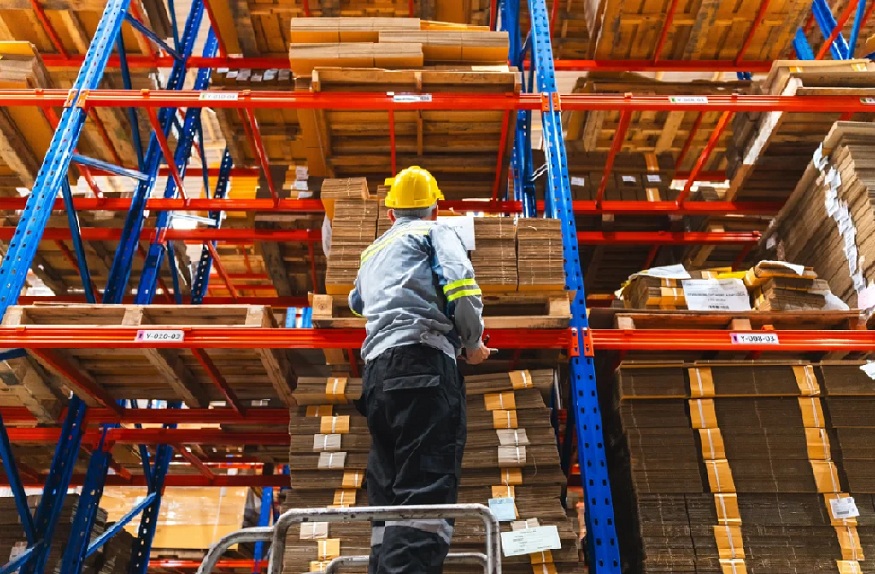
Pallet rack systems maximize warehouse storage space by converting unused overhead vertical air space into usable, highly organized product storage capacity. Up to 80% of a facility’s total cubic capacity is wasted when commodities are only stored on the warehouse floor, which forces businesses to lease larger facilities earlier. Installing engineered heavy-duty racking allows industrial operations to stack inventory four to six levels high, instantly multiplying total storage density without expanding the building’s physical footprint. Installing heavy-duty pallet racks Los Angeles in your warehouse maximizes vertical storage space and keeps inventory organized for efficient forklift access.
Unlocking Unused Vertical Cube Space
Every commercial warehouse possesses two distinct dimensions of capacity: floor square footage and vertical cubic volume. Floor-level staging limits inventory capacity strictly to the surface area of the concrete slab, creating massive inefficiencies across large facilities. Pallet racking transforms entire open air volume into structured, load-bearing storage channels.
Read More: Chicago CPA: Specialized Guide for Small Business Owners
Vertical industrial racking allows facility managers to store dozens of pallets in the precise floor footprint that was once occupied by a single unit load by rising toward the ceiling trusses. This structural shift optimizes high-bay facilities, allowing logistics operations to store thousands of additional stock keeping units without taking on expensive building expansion projects or secondary lease commitments.
Streamlining Inventory Organization and Selectivity
Storing inventory on structured racking levels eliminates the clutter and risk associated with direct floor stacking. Block-stacked pallets often become inaccessible, leading to damaged product boxes, buried stock keeping units, and severe stock rotation bottlenecks. Selective pallet racking gives forklift operator’s immediate, unobstructed access to every single pallet location without moving surrounding loads.
Enhanced selectivity shortens order picking travel times and accelerates dock-to-stock material handling workflows. Workers quickly locate required items using clear rack aisle labeling, which reduces mispicks and improves overall inventory tracking accuracy. Organizing stock vertically ensures sensitive or high-value merchandise stays off the concrete floor, protecting items from moisture, dust, and accidental machinery impacts.
Narrow Aisle Configurations and Density Customization
Modern industrial racking systems adjust to match specific operational requirements, inventory turnover speeds, and forklift capabilities. Standard selective racking requires wider aisles for traditional counterbalanced forklifts, whereas narrow aisle and very narrow aisle configurations reduce aisle widths significantly to reclaim valuable floor space.
High-density storage solutions such as drive-in racking, push-back racking, and pallet flow systems eliminate extra aisle space entirely. These designs utilize continuous internal rails or gravity-fed rollers to store pallets several positions deep. Transitioning from standard layouts to high-density dynamic systems allows facilities to increase overall pallet capacity by up to 60 percent within the existing building footprint.
Protecting Goods and Reducing Material Damage
Direct floor stacking relies on lower boxes to support the entire weight of pallets placed above them. Over time, heavy upper loads crush bottom cartons, causing stack leaning, product destruction, and dangerous tip-over hazards for dock workers. Pallet rack systems transfer all load weight directly into heavy-gauge steel upright frames and horizontal step beams anchored securely to the concrete floor.
Because each pallet sits independently on heavy-duty wire decking or support bars, lower items never carry the structural weight of upper inventory. This structural isolation prevents product crushing, preserves carton integrity, and ensures that delicate or oddly shaped goods remain safe during long-term storage. Preventing product degradation saves thousands of dollars annually in damaged inventory write-offs.
Scalability and Future-Proof Warehouse Operations
Pallet rack systems feature modular designs that expand, reconfigure, or adjust alongside changing business demands. Teardrop beam connections allow warehouse managers to adjust shelf heights quickly when product dimensions change, ensuring no vertical space goes unused between storage tiers.
Read More: 3 Marketing Strategies That Help Small Businesses Stand Out
As order volume grows, facilities easily extend rack runs horizontally or integrate automation tools like automated guided vehicles and shuttle systems into existing racking grids. Investing in scalable industrial storage infrastructure allows growing businesses to adapt quickly to seasonal inventory fluctuations, new product line rollouts, and higher distribution volumes.
Conclusion
Pallet rack systems offer the most efficient, cost-effective strategy for maximizing warehouse storage space and improving material handling performance. Reclaiming vertical air space and implementing specialized storage layouts transforms underutilized facilities into highly dense, organized logistics hubs. These engineered systems eliminate floor clutter, accelerate order fulfillment, and protect valuable inventory from structural damage. Upgrading to an optimized pallet racking infrastructure ensures your warehouse operates at peak efficiency while accommodating long-term business growth.
